
What is Horizontal Directional Drilling (HDD)? | Camjet

How Horizontal Directional Drilling (HDD) installs underground pipes without trenches. Explore the 3-stage pilot bore, reaming, and pullback process.

What is Horizontal Directional Drilling (HDD)?
When installing new pipelines under roads, railways, watercourses, or sensitive landscaped areas, traditional open-cut trenching causes major traffic and environmental disruption.
Horizontal Directional Drilling (HDD) is a trenchless technique that allows underground pipes (up to 300 mm and larger using mini-to-midi rigs) to be installed seamlessly along a planned path with minimal surface disturbance.
To understand how HDD achieves this without digging up the surface, let’s break down the three core stages of the directional drilling process.
The 3-Stage HDD Installation Process
According to industry standards (such as SASTT-TS-TT3), executing a successful HDD project relies on a precise, multi-stage sequence:
1. The Pilot Bore
The Process: A steerable drill head attached to hollow steel drill rods is pushed and rotated into the ground from an entry pit, following the pre-designed vertical and horizontal alignment.
Guidance & Steering: Surface tracking or wireline guidance systems monitor the drill head’s pitch, depth, and azimuth continuously. If obstacles or deviations occur, the operator applies corrective steering by adjusting the rotational orientation of the drill head.
2. Back-Reaming (Bore Expansion)
The Process: Once the pilot bore breaks through at the exit point, the initial pilot hole is usually too small to accept the final product pipe.
Expanding the Bore: A specialised cutting tool called a reamer is attached to the drill string and pulled back toward the machine. For larger bores, the hole may require pre-reaming in incremental stages. Specialised drilling fluids (bentonite slurry) are pumped down the drill string to cool the tooling, stabilise the borehole walls, and flush out soil cuttings.
3. Pipe Pullback
The Process: In the final step, the new product pipe (typically continuous butt-welded High-Density Polyethylene / HDPE) is attached behind the reamer using a heavy-duty swivel and pulling head.
Continuous Operation: The drilling rig pulls the product pipe through the newly enlarged, fluid-stabilised borehole. Because drilling fluids reduce friction and gelling agents support the bore walls, pullback operations must run as a continuous, uninterrupted process until the pipe is safely positioned.
Key Benefits of Horizontal Directional Drilling
Zero Surface Disruption: Crosses beneath busy highways, rail lines, riverbeds, and existing structures without interrupting traffic or surface operations.
Environmental Protection: Prevents soil erosion, protects sensitive habitats, and eliminates topsoil destruction in eco-sensitive zones.
Cost & Time Savings: Eliminates expensive asphalt reinstatement, paving, trench shoring, and extensive earthmoving costs.
Versatile Product Pipes: Accommodates high-density polyethylene (HDPE), PVC, steel, and ductile iron for water, sewer, gas, and electrical conduit installations.
Professional Trenchless Engineering & Support with Camjet
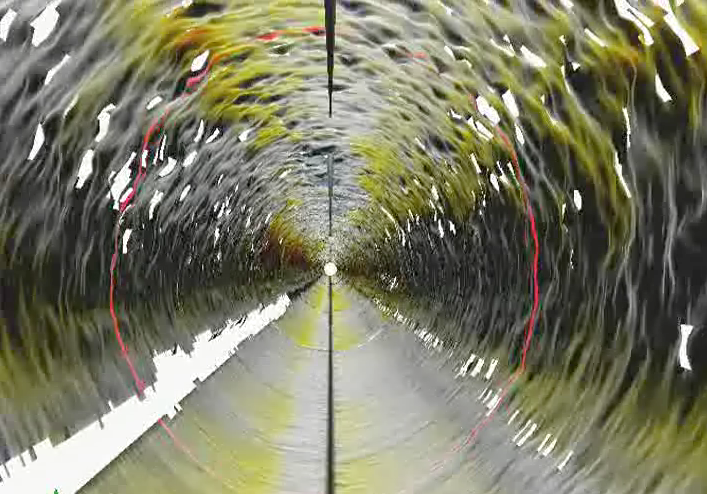
Horizontal Directional Drilling eliminates the heavy excavation, shoring, and surface restoration associated with traditional trenching. When paired with accurate pre-construction planning, utility locates, and high-definition CCTV inspections, HDD provides a safe, highly efficient pipeline installation method.
Need Expert Trenchless Pipeline Solutions in South Africa?
Contact the Camjet team today to discuss your next infrastructure, pipeline, or trenchless project!
Frequently Asked Questions (FAQs) Horizontal Directional Drilling
Why are drilling fluids used during HDD?
Drilling fluids (typically a mixture of water and sodium bentonite clay) serve multiple critical functions: they cool cutting heads, lubricate the passage of drill rods and product pipes, suspend and flush out soil cuttings, and form a thixotropic gel that stabilizes the borehole walls to prevent cave-ins.
How does the contractor ensure existing underground services are not hit?
Before drilling commences, all existing underground utilities (water, power, fiber) are carefully located using utility maps, ground-penetrating radar (GPR), and hand-excavated or vacuum-excavated potholes/waypoint pits to visually verify clearances and ensure safe passage for the drill string.
Can HDD be stopped halfway through the pipe pullback?
No. Once pullback operations begin, they must continue without interruption. If the pipe stops moving, the thixotropic drilling fluid begins to gel ("freeze"), drastically increasing drag forces and risking pipeline "hydrolock" or getting the product pipe permanently stuck in the borehole.
Camjet - Johannesburg
Camjet - Durban
Camjet - Cape Town


Comments